
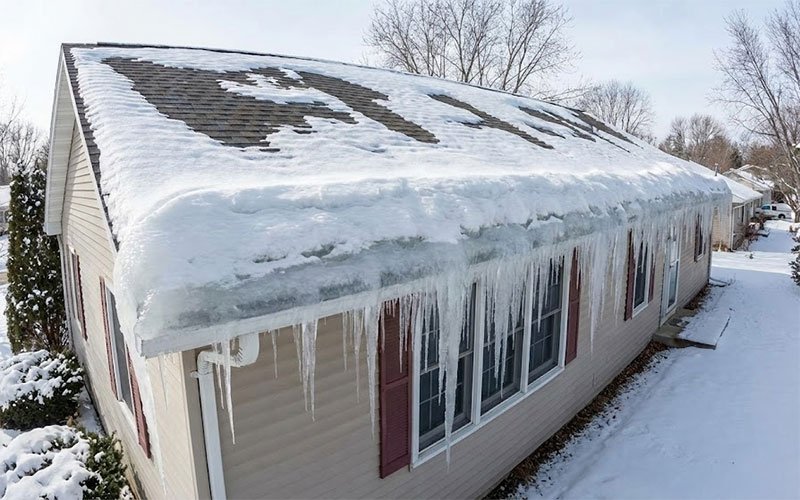
If you have lived in East Peoria through a few winters, you know the sight: thick ridges of ice clinging to the edge of roofs, often with long, sharp icicles hanging down like stalactites.
While they might look like a winter wonderland scene, these ice formations—known as ice dams—are actually a serious threat to your home. They can cause thousands of dollars in water damage to your ceilings, walls, and insulation.
At Paws Roofing Contractors, we receive dozens of emergency calls every February from homeowners wondering why their roof is leaking when it hasn’t rained. Here is the science behind ice dams and, more importantly, how to stop them.
What Exactly is an Ice Dam?
An ice dam is a ridge of ice that forms at the edge of a roof and prevents melting snow (water) from draining off. The water that backs up behind the dam can leak into a home and cause damage to walls, ceilings, insulation, and other areas.
The Cycle of Destruction:
- Heat Escapes: Warm air from your living space leaks into your attic.
- Snow Melts: That warm attic heats the roof deck, melting the bottom layer of snow on your shingles.
- Water Freezes: The meltwater runs down the roof until it hits the eaves (overhangs). Since the eaves aren’t over the heated house, they are freezing cold. The water turns to ice.
- The Backup: As this cycle repeats, the ice builds up. Eventually, a pool of liquid water forms behind the ice. Since shingles are designed to shed water running down, not hold standing water, this pool seeps underneath the shingles and into your house.
Why “Just Knocking Them Off” is Dangerous
When homeowners see icicles, the instinct is often to grab a shovel, a hammer, or even a hockey stick to hack them away. Please do not do this.
Asphalt shingles become extremely brittle in freezing temperatures. Smashing the ice often leads to smashing the shingles, cracking the fiberglass matting, or ripping off the protective granules. You might remove the ice, but you will likely need a roof repair come spring.
Furthermore, climbing a ladder in icy conditions is a major safety risk.
The Real Solution: It’s All About the Attic
To fix ice dams permanently, you don’t focus on the ice; you focus on the attic temperature. The goal is a “Cold Roof”—keeping the roof deck the same temperature as the outside air.
- Insulation: If your attic floor isn’t properly insulated, heat escapes from your living room straight to the roof. We check for gaps in fiberglass or low insulation levels.
- Ventilation: You need cold air entering the soffits (eaves) and hot air exiting the ridge. This airflow washes the underside of the roof deck with cold air, preventing the snow from melting prematurely.
- Sealing Bypasses: Often, heat leaks up around chimney chases, light fixtures, or attic hatches. Sealing these air leaks is critical.
What to Do If You Have a Leak Right Now
If you notice water stains on your ceiling during a freeze/thaw cycle:
- Don’t ignore it. Wet insulation breeds mold quickly.
- Call a professional. We can safely remove snow loads to stop the “fuel” for the dam.
- Schedule an inspection. Once the roof is clear, Paws Roofing can audit your attic ventilation and insulation to ensure it doesn’t happen again next year.
Paws Roofing Contractors Corp
Serving East Peoria, Washington, Morton, and Pekin.
Address: 2813 N Main St, East Peoria, IL 61611
Phone: +1 866-712-0356
Website: https://pawsroofing.com/