
Most homeowners in East Peoria think a roof’s only job is to keep water out. But a healthy roof has a second, equally important job: it needs to breathe.
Your attic ventilation system is the lungs of your home. When it’s working, you never notice it. But when it’s clogged or unbalanced, your attic begins to “suffocate.” In the extreme climate of Central Illinois, a poorly ventilated attic can destroy your shingles from the inside out and drive your energy bills through the roof.
At Paws Roofing Contractors, we find that nearly 50% of the homes we inspect do not have adequate exhaust or intake ventilation. Here are the warning signs that your attic is gasping for air.
1. The “Oven Effect” (Summer Symptom)
Have you ever walked upstairs on a July afternoon and felt like you hit a wall of heat?
If your attic can’t exhale the hot air building up under the roof, the temperature up there can reach 150°F to 160°F. This massive heat load radiates down into your bedrooms, forcing your air conditioner to run non-stop just to fight the ceiling heat.
The Roof Damage: That extreme heat doesn’t just annoy you; it cooks your shingles. We often see “blistering” on shingles that are only 10 years old because the asphalt has literally boiled from the underside.
2. The “Sweating” Attic (Winter Symptom)
In winter, we seal our homes tight to keep the heat in. But we also generate moisture—from showering, cooking, and even breathing. That warm, moist air rises and eventually leaks into the attic.
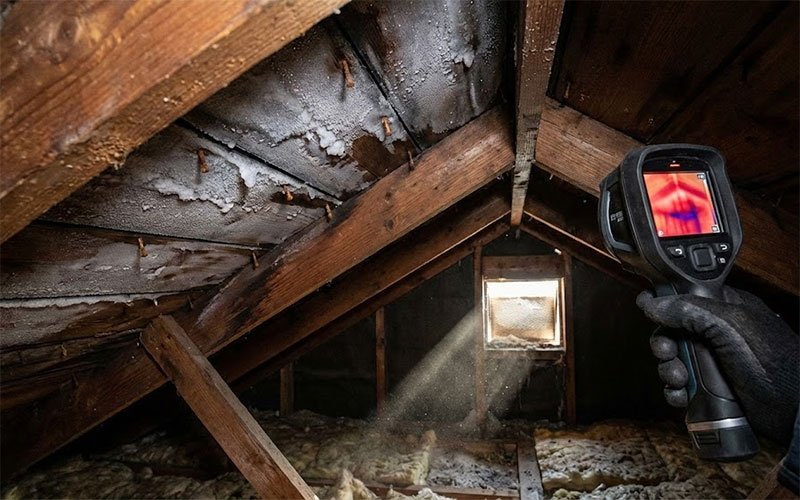
If your attic is properly vented, that moisture is whisked away by cold, fresh air. If it isn’t, the moisture gets trapped and condenses on the cold nails and roof decking.
The Warning Signs:
- Rusty Nails: If you pop your head in the attic and see rusty nail heads sticking through the wood, your attic is too wet.
- Frost: On very cold days, you might actually see frost on the underside of the roof deck. When it warms up, this frost melts and drips onto your insulation.
3. Mold and Mildew Growth
Where there is moisture and darkness, mold follows. A “suffocating” attic is the perfect breeding ground for black mold.
This isn’t just a structural issue (rotting your wood rafters); it’s a health issue. As the stack effect pulls air through your home, mold spores from the attic can be drawn into your living space, aggravating allergies and asthma.
4. The Fix: Balancing the “In” and “Out”
Many homeowners try to fix this by slapping a solar fan on the roof and calling it a day. This often makes the problem worse.
Proper ventilation requires a balanced system of Intake and Exhaust.
- Intake (The Soffits): You need fresh air entering at the bottom of the roof (under the eaves).
- Exhaust (The Ridge): You need hot air exiting at the very peak of the roof.
If you have a powerful exhaust fan but blocked soffit vents (often covered by insulation), the fan will starve for air and start pulling conditioned air from inside your house, increasing your energy bills even more.
Get a Free Ventilation Audit
You can’t fix what you can’t measure. If your upstairs is hot, or if you smell something musty, call Paws Roofing.
We will calculate your attic’s “Net Free Area” to see if you have enough intake and exhaust. Often, the solution is as simple as adding a Ridge Vent system or installing inexpensive baffles to clear your soffits.
Paws Roofing Contractors Corp
Serving East Peoria, Washington, Morton, and Pekin.
Address: 2813 N Main St, East Peoria, IL 61611
Phone: +1 866-712-0356
Website: https://pawsroofing.com/